Most people judge food by the front of the package.
Words like “natural,” “low sugar,” “whole grain,” or “made with real ingredients” catch the eye fast. But the real truth of what you’re eating isn’t on the front at all.
It’s on the back—specifically, in the first three ingredients.
Why the first three ingredients matter
Ingredient lists are ordered by weight, not importance or marketing appeal.
That means:
-
The first ingredient makes up the largest portion of the product
-
The second and third aren’t far behind
-
Everything after that is present in smaller amounts
In other words, the first three ingredients usually tell you what the product mostly is, not what the brand wants you to believe it is.
A common example
You pick up a “healthy” snack bar.
The front says:
-
“Plant-based”
-
“Good source of fiber”
-
“Naturally flavored”
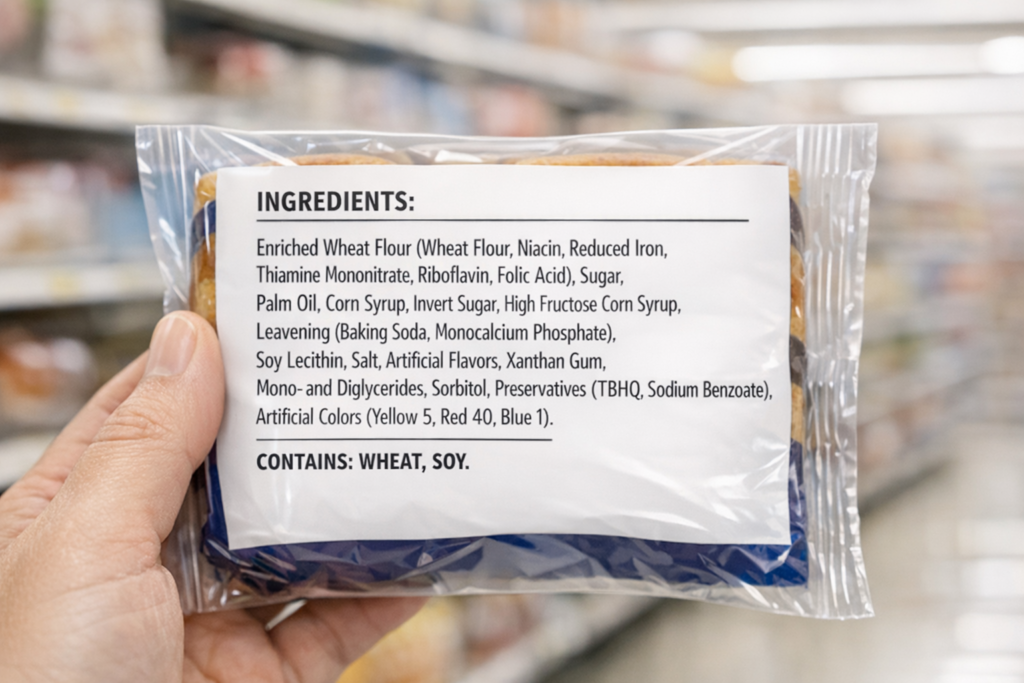
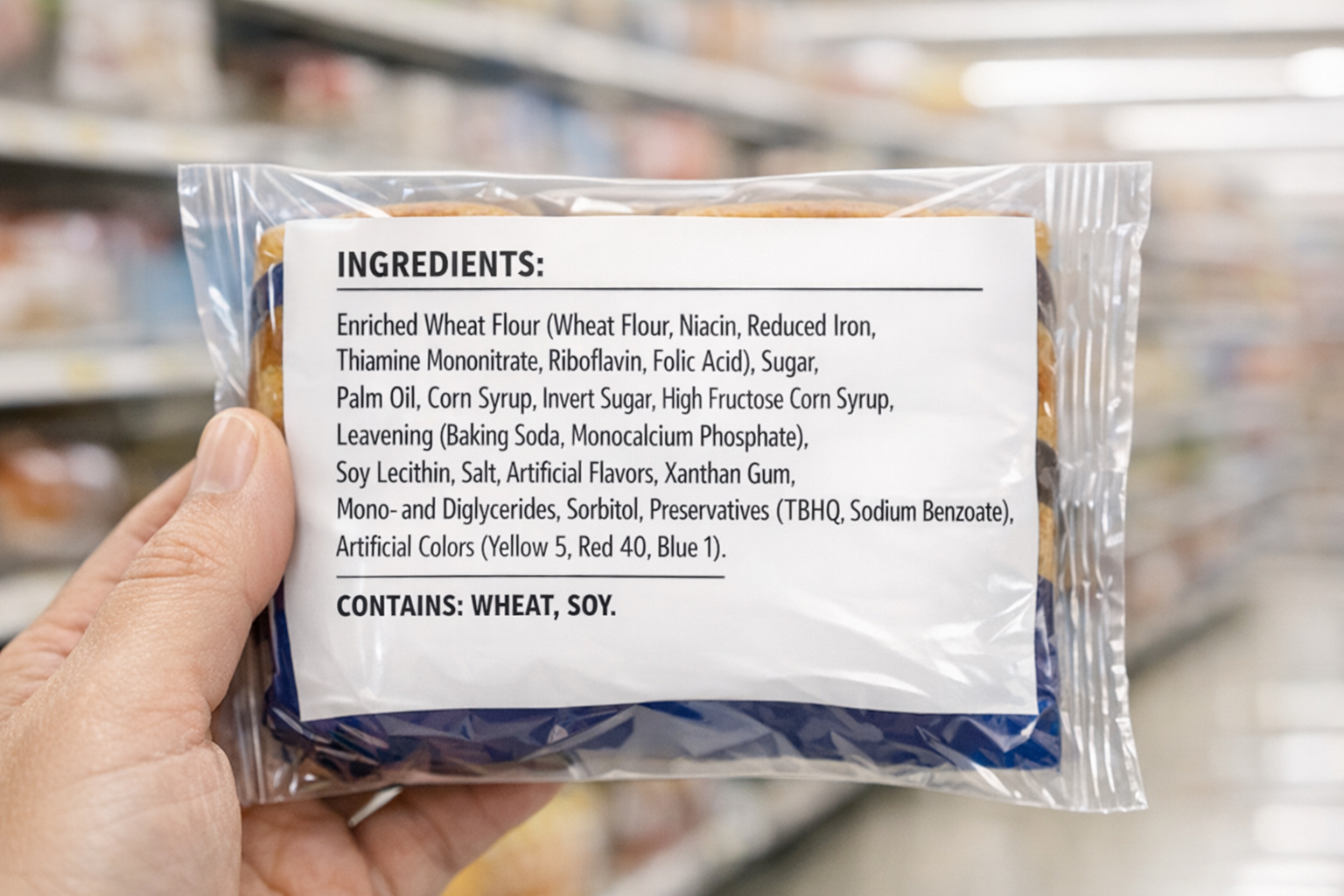
But the first three ingredients read:
-
Corn syrup
-
Enriched wheat flour
-
Sugar
That bar isn’t a health food with some sugar added.
It’s mostly sugar and refined flour, dressed up with a few better ingredients later on.
Why this matters for your body
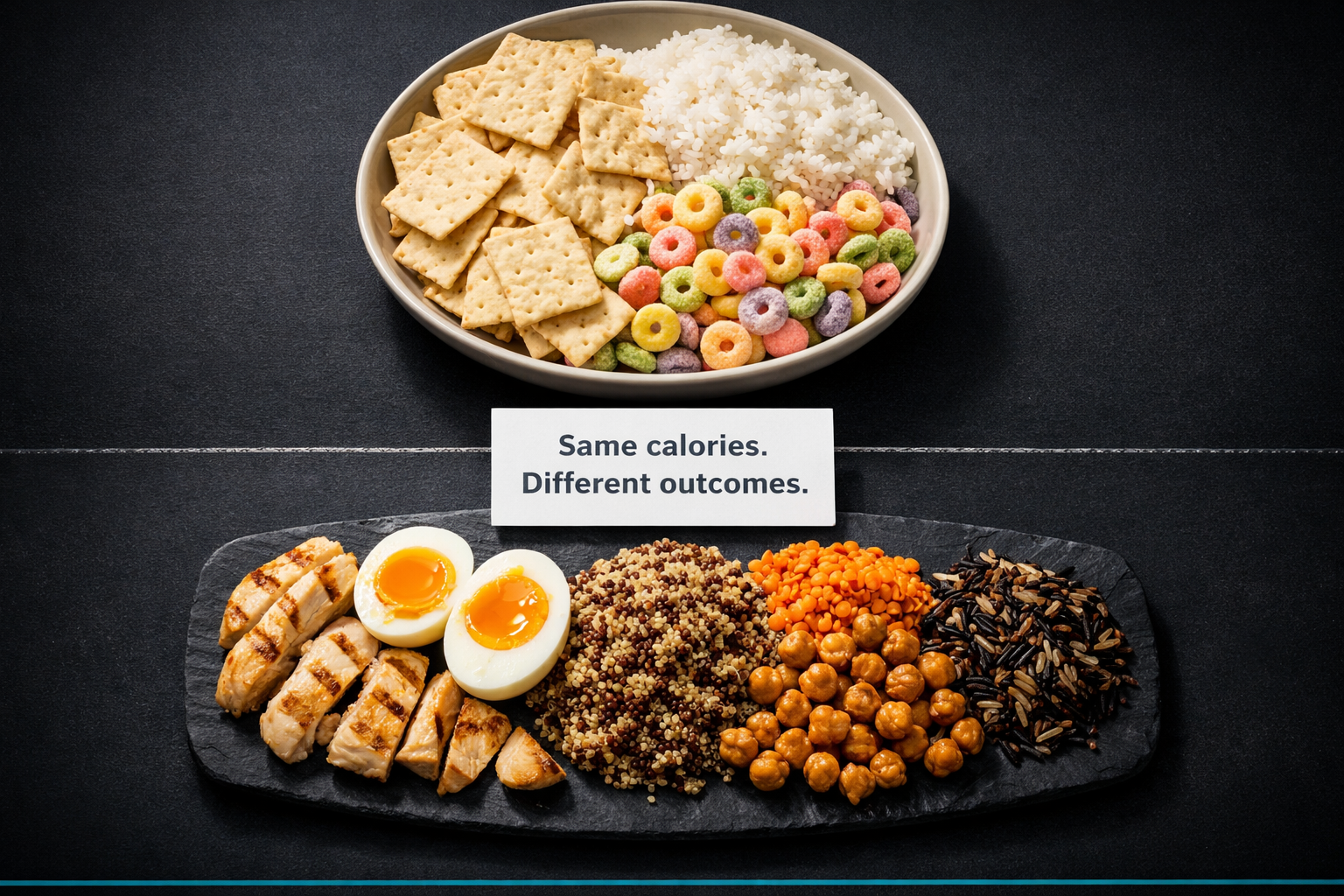
When the bulk of a product is made from refined sugars or processed starches, your body experiences:
This happens even if the calorie count looks reasonable or the label claims balance.
It’s not about perfection or avoiding packaged food entirely—it’s about knowing what you’re actually eating.
What to look for instead
When scanning the first three ingredients, a better sign is seeing:
-
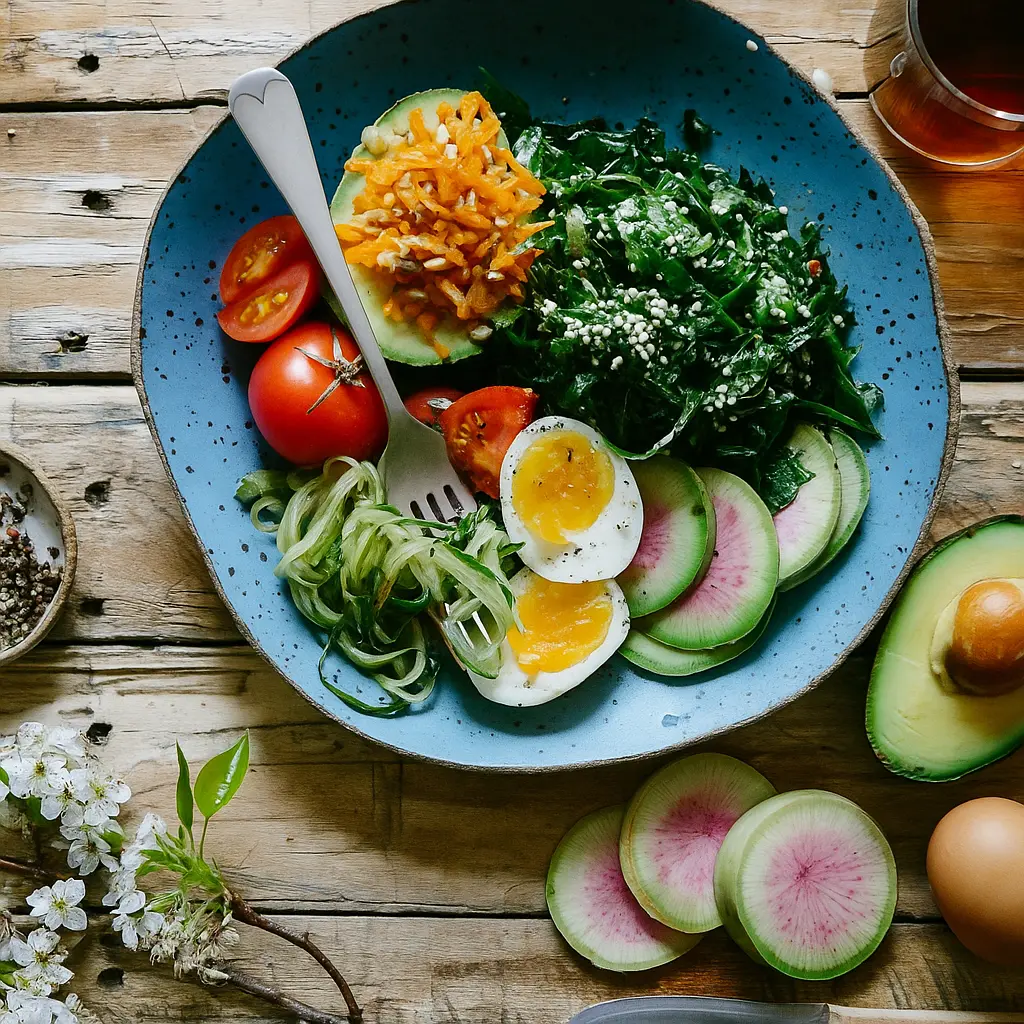
Whole foods you recognize
-
Single-ingredient items (like oats, beans, nuts, milk, eggs)
-
Ingredients you could reasonably find in a kitchen
If the first three ingredients already look questionable, the rest of the list usually doesn’t save it.
This one habit changes everything
You don’t need to count calories.
You don’t need to memorize nutrition science.
You don’t even need to avoid all processed foods.
You just need to slow down long enough to read the first three ingredients.
That single habit creates awareness—and awareness creates better decisions without willpower battles.
Next time you shop, pick up one packaged food you usually buy.
Before looking at the front of the package, read only the first three ingredients.
Then ask yourself:
Is this what I want most of my food to be made of?
If the answer is no, put it back—or look for a version with a simpler top three.
That’s discipline through clarity.