The hidden lever most people ignore: speed
Most people think health comes down to willpower or perfect meals.
But there’s a sneaky lever that changes everything without you realizing it:
How fast you eat.
When you eat fast, your body doesn’t get a fair chance to send the “we’re good” signal in time. So you end up overshooting—not because you’re weak, but because your system is late.
That matters even more today because a lot of modern foods are built for speed:
soft textures
easy-to-chew bites
high reward flavors
low effort swallowing
In other words: foods that disappear before your body can vote.
Ultra-processed foods don’t just taste different — they move different
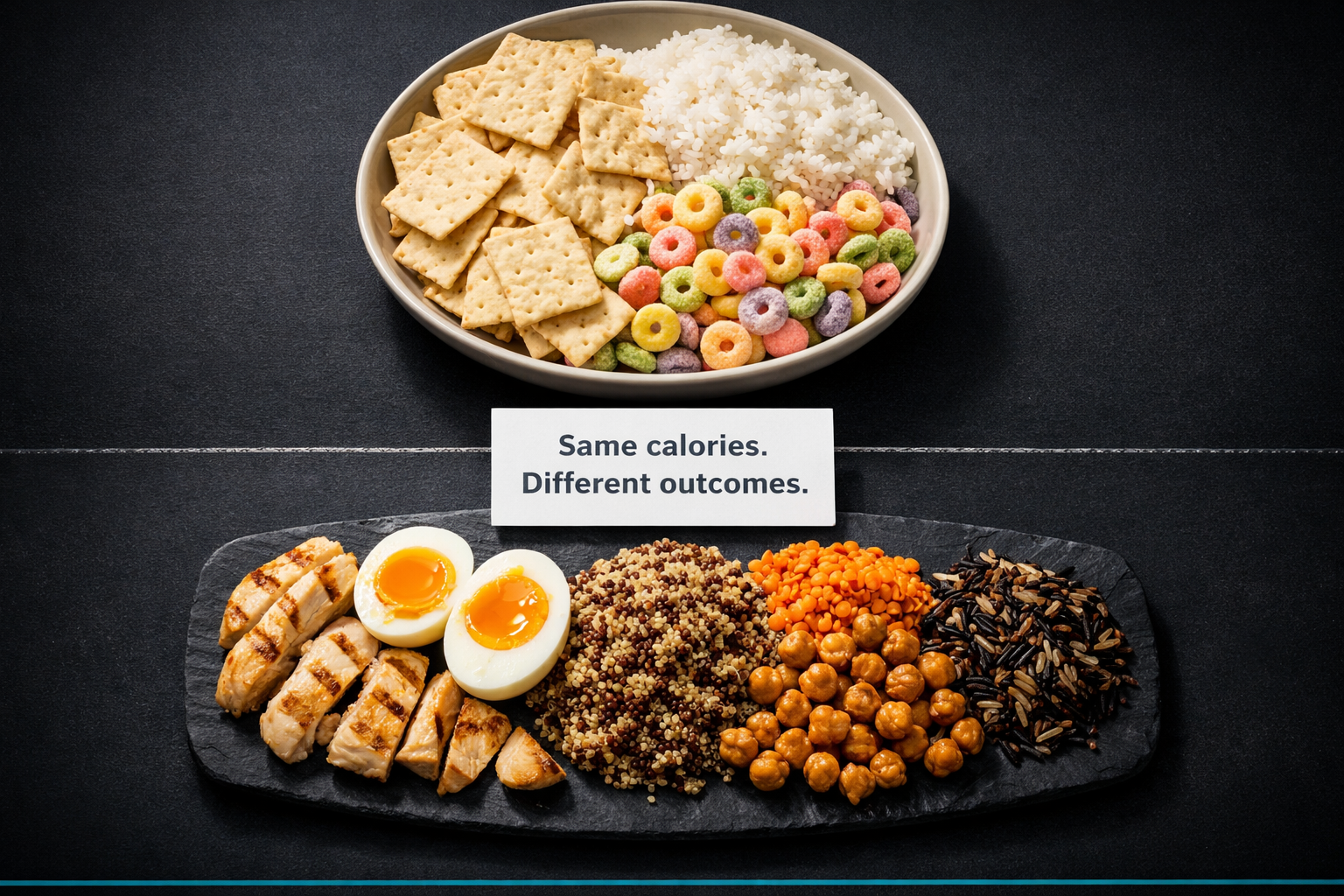
A major controlled trial found that when people ate an ultra-processed diet, they consumed significantly more calories per day and gained weight compared to when they ate minimally processed foods—even though meals were matched for things like calories offered and macronutrients. �
PubMed
The point isn’t “never eat anything fun.”
The point is: ultra-processed foods make it easy to eat faster and eat more without noticing.
Fast eating is consistently linked with worse outcomes
Multiple studies link fast eating with higher risk markers (like higher odds of overweight/obesity and cardiometabolic risk factors). �
PubMed +1
This doesn’t mean “if you eat fast you’re doomed.”
It means: eating speed is a real lever you can train.
The DD “Slow Down System” (easy, realistic, repeatable)
1) The 10-Minute Rule
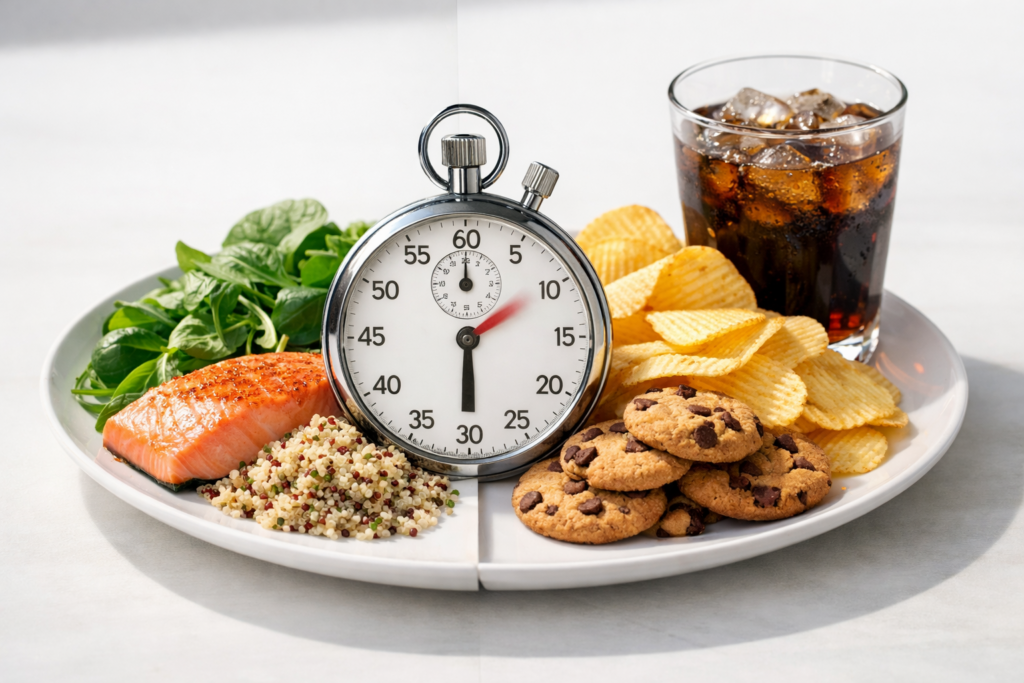
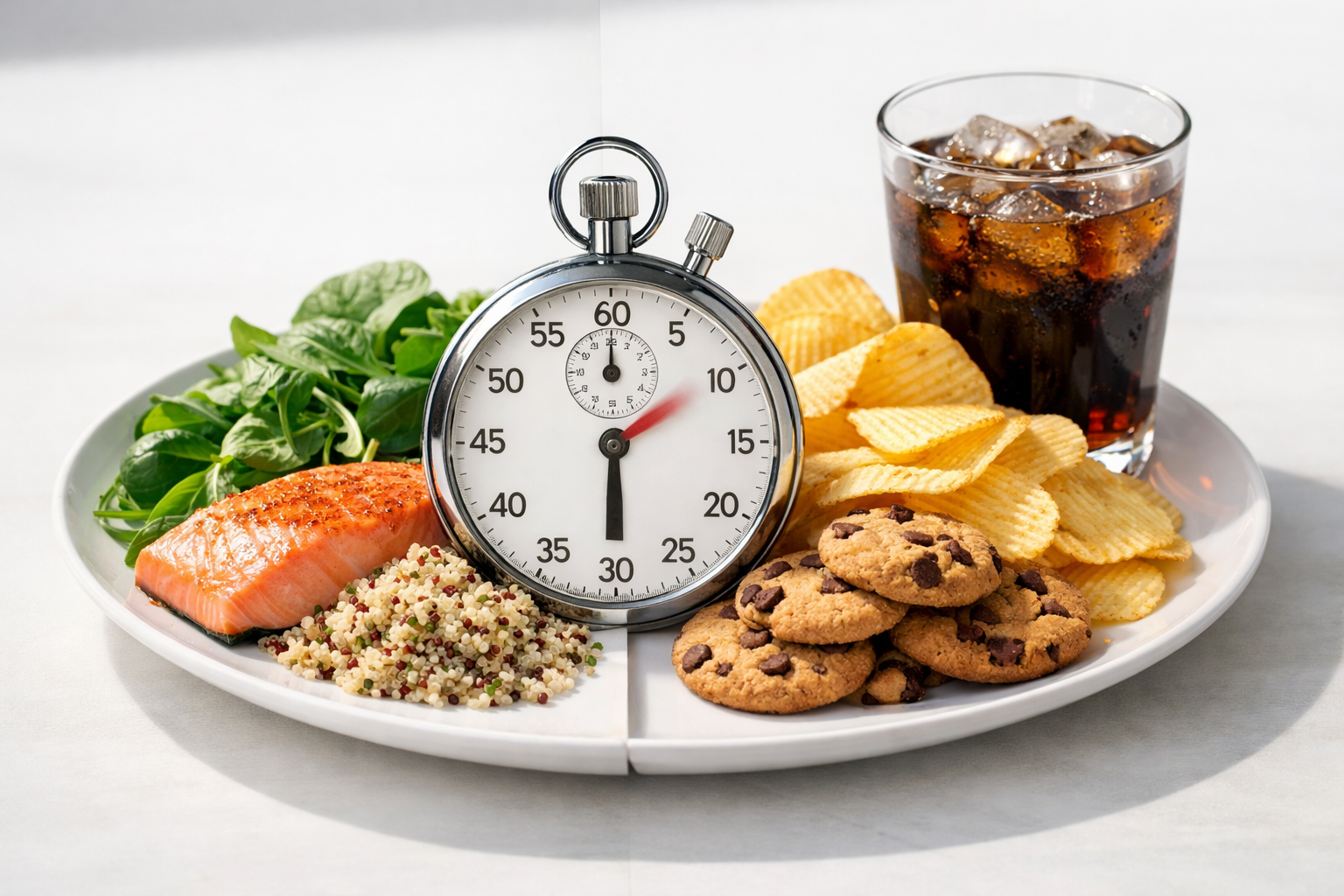
Set a timer for 10 minutes.
Your only goal: make the meal last the full 10 minutes.
Not perfect. Just slower than yesterday.
2) Fork Down Reps (Discipline that actually builds)
After every bite:
chew
swallow
set the fork down
breathe once Then go again.
That tiny pause gives your brain time to catch up.
3) Start With “Volume Foods”
Start your meal with:
leafy greens
vegetables
broth-based soup
This makes it harder to overeat the dense stuff later.
(And if you do this 80% of the time, you win.)
4) The “Chew Count” Micro-Challenge
Pick ONE meal today and do:
10 slower chews per bite for the first 5 bites
That’s it. Short. Doable. Repeatable.
Chewing more has been shown to increase satiety-related responses and reduce intake in research summaries.