
Food Labels & Ingredients
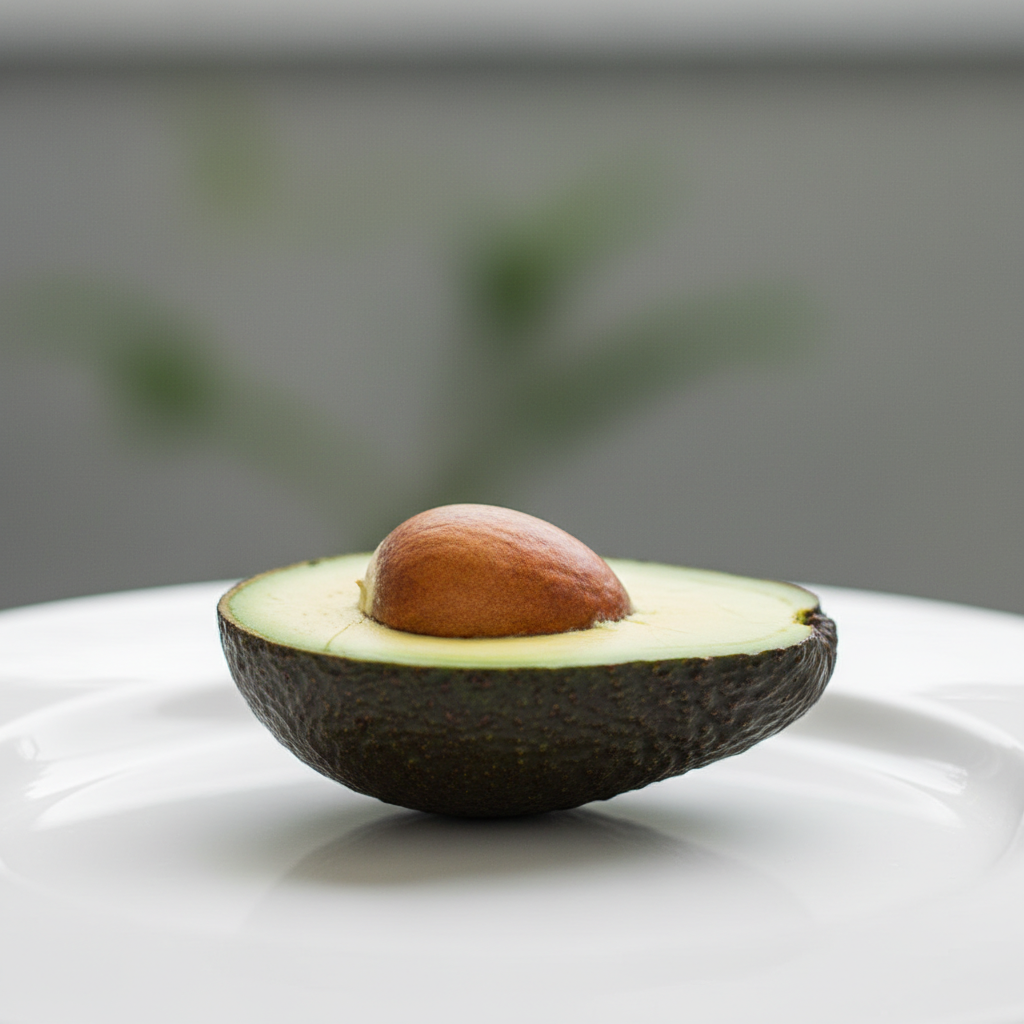
That avocado sitting on your counter right now might be coated in something you did not choose and cannot wash off.
It is called Apeel. It is an invisible, tasteless coating applied to fruits and vegetables after harvest. The company says it reduces food waste. Regulators say it is safe. Critics say the process deserves more scrutiny and consumers deserve more transparency.
This is Part 1 of a series. No hype. No panic. Just the facts you need to make your own decision.
What Is Apeel, Exactly?
According to its original FDA filing (GRN No. 886), Apeel is a coating made from purified mono- and diglycerides derived from grapeseed oil. The company has indicated its current formulation may differ from what was originally filed. These are lipids, a type of fat that naturally occurs in the peels, seeds, and pulp of fruits and vegetables. Mono- and diglycerides have been used as food additives since the 1930s and are common in processed foods like ice cream, baked goods, and candy.
When applied to produce, the coating creates a thin, invisible barrier that slows down water loss and oxidation, the two main causes of spoilage. Retailers using Apeel report a roughly 50% reduction in avocado waste.
Apeel is not a wax, like traditional produce coatings. It is a layer of plant-derived lipids applied post-harvest. You cannot see it. You cannot taste it. And according to the company, you cannot wash it off.
The key distinction: Apeel is designed to be permanent. Unlike surface dirt or some pesticide residues, this coating bonds to the produce and stays there through washing, peeling, and eating.
Two Product Lines
Apeel Sciences developed two versions of their coating:
- Edipeel (for conventional produce): contains only mono- and diglycerides
- Organipeel (for organic produce): contained citric acid, baking soda, and mono- and diglycerides. Discontinued in 2023 after controversy over its regulatory classification
How It Is Made
This is where it gets more complicated. Apeel’s original manufacturing process used ethyl acetate and heptane as solvents, plus palladium as a catalyst to extract the monoacylglycerides from grapeseed oil.
The company states it has since switched to a distillation-based process using pressure and heat, without solvents. However, the FDA’s own GRAS filing (GRN No. 886) acknowledges trace levels of processing residues, including:
- Ethyl acetate
- Heptane
- Palladium
- Arsenic
- Lead
- Cadmium
- Mercury
According to the filing, estimated maximum consumption levels of ethyl acetate and heptane from Apeel-coated produce are approximately 10% of the maximum permitted daily exposure set by the FDA. Whether “within limits” equals “no concern” is one of the central debates.
Which Foods Are Coated?
Apeel started with avocados and has expanded significantly. The coating is now applied to:
| Category | Produce |
|---|---|
| Fruits | Avocados, apples, citrus (lemons, limes, oranges, mandarins), mangoes, strawberries, bananas, pineapples, melons, papayas, pomegranates, kumquats, raspberries |
| Vegetables | Cucumbers, English cucumbers, asparagus, tomatoes, leafy greens |
The formulation is adjusted for each type of produce. Avocados remain the most widely treated product.
Who Approved This?
Multiple agencies have weighed in on Apeel, and the regulatory picture is more nuanced than a simple “approved” or “not approved.”
| Agency | Decision | Details |
|---|---|---|
| FDA | GRAS status | Self-determined by Apeel via GRAS Notice GRN No. 886 (2019). FDA responded with “no questions.” |
| EPA | Registered | Organipeel registered as a biopesticide/fungicide (Registration No. 92708-1) |
| USDA / OMRI | Approved for organic | Classified as a “fungicide” rather than a “coating,” which critics call a regulatory loophole |
| EU / UK | Restricted | Approved only for thick-skinned produce (avocados, citrus, bananas, etc.). Not approved for apples, berries, or leafy greens |
The GRAS Question
This is worth understanding. GRAS stands for “Generally Recognized As Safe.” Under this system, a company can determine that its own ingredient is safe and notify the FDA. The FDA reviews the notice but does not independently test the product. If the FDA has “no questions,” the ingredient proceeds to market.
Most of the safety evidence for Apeel comes from Apeel’s own submissions, not from independent laboratories. This is not unique to Apeel. It is how the GRAS system works across the food industry. But it does mean the level of independent scrutiny is limited.
Where Is It Sold?
Because Apeel is applied by produce suppliers rather than retailers, and labeling is not required, it can be difficult to know whether your produce has been treated. Here is what is known:
Stores That Carry (or Have Carried) Apeel Produce
- Walmart
- Target
- Kroger (and subsidiaries)
- Albertsons
- Harps Food Stores
- Bristol Farms, Cub Foods, Fairway Market, Shaw’s, Star Market
Stores That Reject Apeel
Several major retailers have taken a clear stance against Apeel-coated produce:
| Retailer | Position |
|---|---|
| Costco | Confirmed it no longer carries Apeel-coated produce |
| Trader Joe’s | Reported to no longer source Apeel-treated produce |
| Natural Grocers | Banned across all stores with a public corporate statement |
| Sprouts Farmers Market | Reported to not carry Apeel produce |
| Publix | Reported to not purchase Apeel-treated produce |
| Fresh Thyme | Reported to not source Apeel produce |
What Are the Concerns?
Critics of Apeel include consumer advocacy groups, organic standards organizations, and health-focused retailers. Their concerns fall into several categories:
1. No labeling required. Consumers cannot see, taste, or identify the coating. There is no requirement for retailers or suppliers to disclose that produce has been treated.
2. Cannot be washed off. Unlike surface residues from some pesticides, Apeel is designed to bond to the produce permanently. Washing does not remove it.
3. Trace contaminants in FDA filings. The GRAS filing acknowledges trace levels of heavy metals and solvents from the manufacturing process. Critics argue these should not be present on fresh produce at any level.
4. Self-determined safety. The GRAS system allowed Apeel to determine its own product was safe. Independent, long-term studies on consuming Apeel-coated produce do not exist.
5. The organic loophole. Mono- and diglycerides are explicitly prohibited as coatings on organic produce. Organipeel was approved by classifying it as a “fungicide” instead of a “coating,” which critics from the Cornucopia Institute and Natural Grocers called a regulatory workaround.
Who Is Speaking Out?
- Cornucopia Institute (organic watchdog): Published a detailed Q&A highlighting that 99.34% of Organipeel’s formulation was classified as proprietary
- Natural Grocers (publicly traded retailer): Published a corporate article, “For the Love of Organics: Apeel,” explaining the reasoning behind their ban
- Organic Insider (industry trade publication): Published “Organipeel Controversy: Key Takeaways,” documenting the fungicide-vs-coating classification issue
- Multiple consumer advocacy groups: Petitioned for independent testing and mandatory labeling of Apeel-treated produce
What Apeel and Supporters Say
Apeel Sciences maintains that the coating is safe, that trace contaminant levels are far below regulatory thresholds, and that the manufacturing process has been updated since the original GRAS filing. Science Feedback, a credible fact-checking organization, reviewed the safety claims and concluded that the coating does not contain toxic ingredients at harmful levels. The Center for Science in the Public Interest has agreed with the FDA’s safety determination.
The EU Restriction
One detail worth highlighting: the European Union, United Kingdom, Norway, and Switzerland only allow Apeel on produce with inedible peels. Avocados, citrus, bananas, mangoes, pineapples, and melons are approved. Apples, berries, leafy greens, and anything where you eat the skin are not approved.
In the United States, Canada, and most other countries, Apeel is approved for use on all fruits and vegetables without restriction, including those with edible skins.
This regulatory gap is one of the most cited points in the debate. If the coating is entirely harmless, critics ask, why does the EU draw a line at produce you actually eat the skin of?
The Bottom Line
Apeel is legal. It has GRAS status. It extends shelf life and may reduce food waste. These are facts.
It is also invisible, cannot be washed off, does not require labeling, was self-certified as safe by the company that makes it, and contains trace manufacturing residues that include heavy metals. These are also facts.
Whether any of this concerns you is a personal decision. But it should be an informed one. And right now, the system is not set up to give you that information at the point of purchase.
Coming up in Part 2: Who funded Apeel Sciences, who profits from it, and how a $100,000 grant from the Gates Foundation became a $2 billion company backed by sovereign wealth funds, venture capital, and celebrity investors.
Know where your produce comes from. Shop at retailers who are transparent about Apeel. Costco, Trader Joe’s, Natural Grocers, Sprouts, Publix, and Fresh Thyme have all refused to carry Apeel-coated produce. When possible, buy from local farms and farmers markets where you can ask the grower directly.