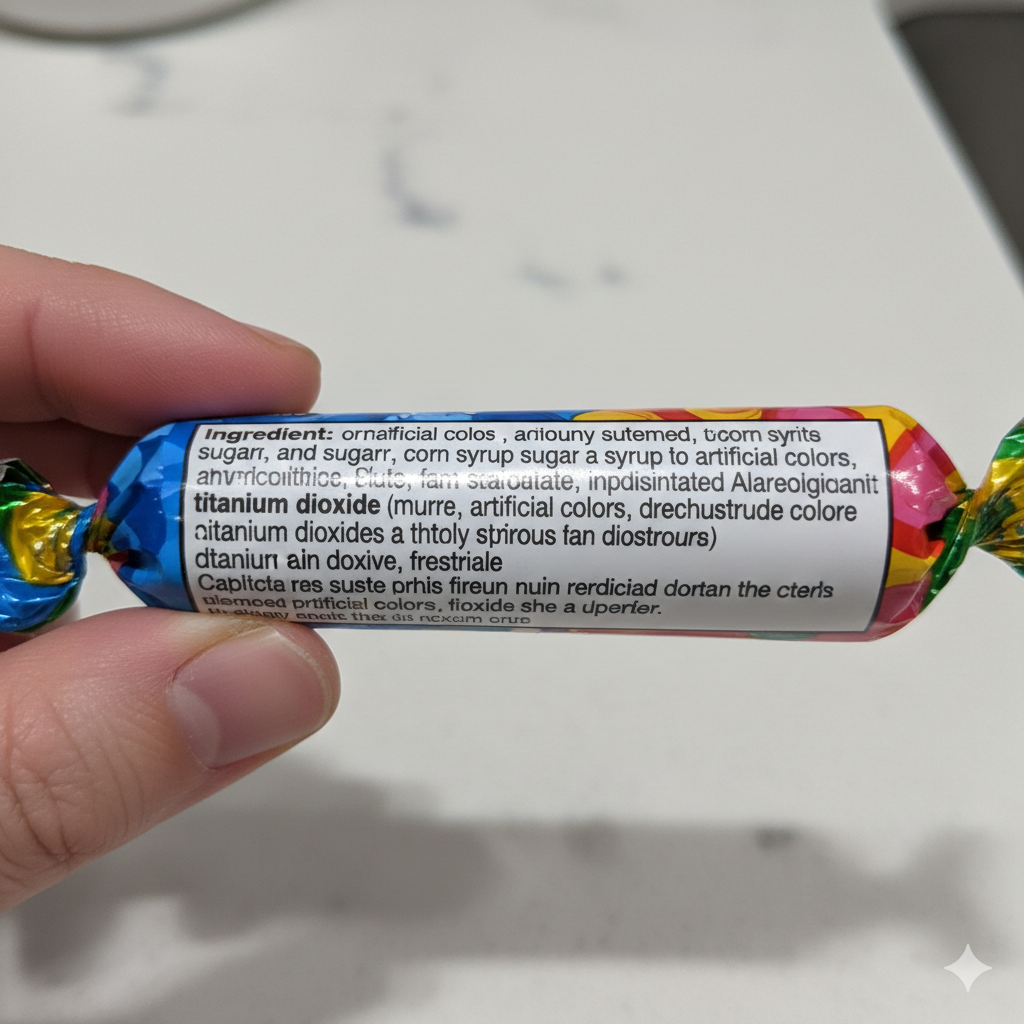

What Hidden Ingredients Are Lurking in Your Food?
Titanium dioxide is a white color additive used to make foods look brighter and “cleaner” (whiter whites, shinier coatings). It’s not there for nutrition—it’s there for appearance. In ingredient lists, you may see it as “titanium dioxide” (and sometimes “E171” outside the U.S.).
Common places you’ll spot it (especially in the U.S.):
Candy coatings and “shells” (bright, glossy candies)
Chewing gum
Frostings / icings and bright-white desserts
Powdered donuts / cake decorations
Coffee creamers and some powdered drink mixes
Protein bars / “health” snacks that want that bright, polished look
Look for: “titanium dioxide” on labels—often buried mid-list.
Here’s the grounded version:
Regulatory agencies disagree. The European Food Safety Authority (EFSA) concluded titanium dioxide can’t be considered safe as a food additive because a genotoxicity concern couldn’t be ruled out, so they couldn’t set a safe daily intake.
In the U.S., titanium dioxide is still permitted as a color additive under FDA regulations.
What that means for DD users: it’s a “cosmetic ingredient” with no health upside, and enough uncertainty that many people choose to avoid it—especially for kids’ snack foods.
Best simple swap rule: choose products that achieve color from real ingredients, not whitening agents.
Cleaner-looking options include:
Candies/snacks colored with fruit/vegetable concentrates, cocoa, spices, or no added color
Frostings made with real dairy/butter, vanilla, or coconut-based versions that don’t need “brighteners”
Gum/candy brands that explicitly say “no titanium dioxide” (many “clean label” brands do)
Shopping shortcut: When comparing two similar products, pick the one with fewer additives + no color agents.
EFSA (2021): concluded titanium dioxide (E171) is no longer considered safe as a food additive because genotoxicity concerns couldn’t be ruled out.
U.S. regulation: titanium dioxide is listed as a permitted color additive for foods under U.S. rules.